Abstract Zoo
Abstract Zoo looks at the contradiction between freedom and structure. A zoo stands for control, display, and limited movement. Abstraction suggests openness and the loss of clear borders. This series lives in the tension between these two ideas.
The animals do not move through natural landscapes. They live in emotional color spaces. These color fields stand for inner states:
blue for vulnerability and the soul, sometimes also sadness;
red for energy and joy;
-gold for dignity, something precious, and celebration.
The animals walk on painted lines. These lines are not cages, but they are not freedom either. They are social paths: structures that guide movement, behavior, and visibility. On first glance, everything looks open and free. But the figures can only move where lines exist.
The monkeys and zebras appear in pairs. They try to create individuality through clothes, jewelry, and patterns. They want to be seen as different, even while walking inside the same structures. Their individuality happens inside a system that they did not choose.
This reflects modern society. We are told we are free and unique. We choose our style, our image, our identity. But we still move inside systems: work, roles, expectations, performance, visibility. Freedom is suggested, but structure remains.
The chameleon breaks this logic. In nature, it stands for adaptation. Here, it does not adapt. It stays black, white, and gold. It does not blend in. It does not move forward. It sits still on its line. Not adapting becomes its position.
Abstract Zoo is not about animals. It is about beings in systems: about movement that looks free but follows lines, about individuality that exists inside rules, and about the quiet question of what happens when someone no longer plays along.
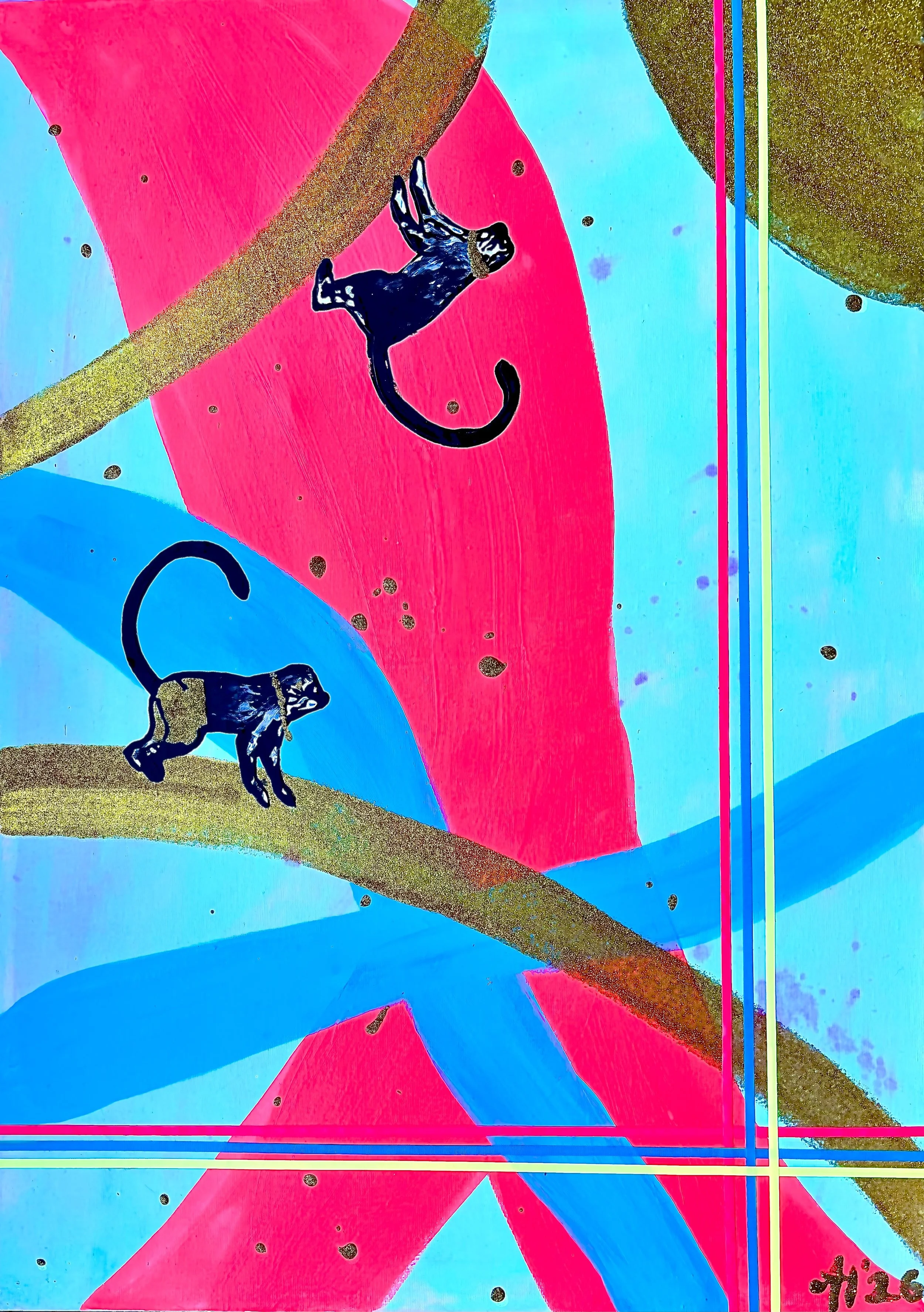
“Abstract Zoo I – Monkeys”, 50×70 cm, mixed media.
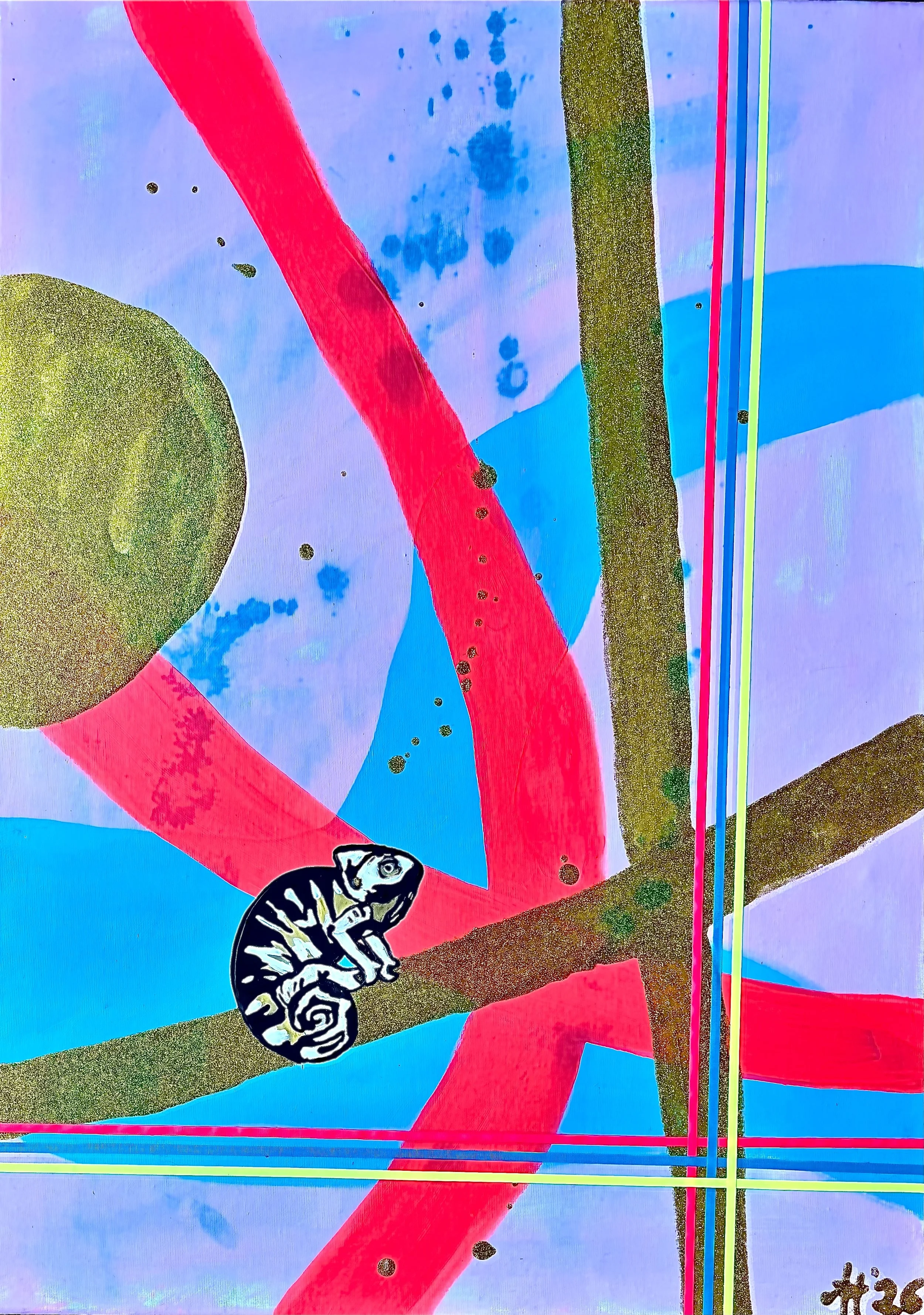
“Abstract Zoo II – Chameleon”, 50×70 cm, mixed media.
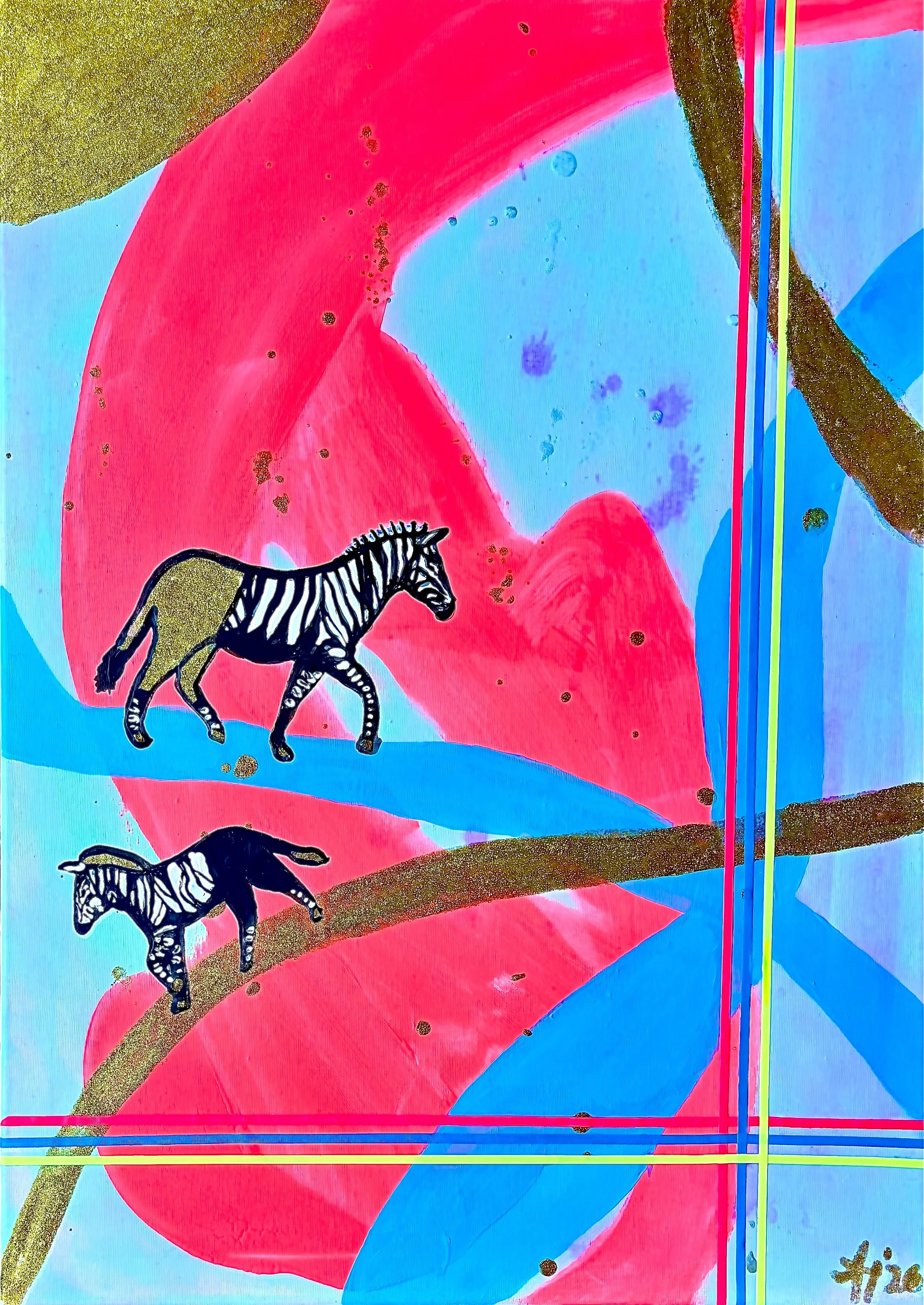
“Abstract Zoo III – Zebras”, 50×70 cm, mixed media.